Monday, May 22, 2017

Decentralized Capital Flow

The delay in completing this essay is due to my vacation. I'll pick it back up when I return to CA.
https://video.img.ria.ru/Out/MP3/20170725/2017_07_25_DOUBLEDOWN70250717_54bfn3bm.umf.mp3
This essay will be my first attempt at critical theory taken from Marxist criticism, Kenneth Burke, and Jean Baudrillard and applied to the flow of capital from central banks into decentralized crypto-currency. I intend to learn through analysis what the exchange of value and trust means especially when trust becomes an integral part of the transaction (a computer process rather than a legal consequence). Concepts for exploration will include corporate, political, and governmental migration which must naturally follow the decentralized flow of capital. The conclusion will question what the transition of the world into a global community on a level playing field of exchange might mean.

Just a note from a FB post. It reminds me of the religious arguments I witnessed between Chris Brown and Nan Gerlinger at Jenny's parent's place. Nan was more rational than Chris but his argument caused a lightning bolt to strike the garage. I decided that the truth with a capital T can't be known. But, the transmission of information, the ways that people come to believe that I can study and influence. So, that is what I do. I've seen the awareness of my ability to program computers come upon me like a demon, like a musician that imagines sounds and then realizes they can play an instrument to recreate and follow where the sounds lead. Then I met thousands of these musicians of open source, the best of them, the founders of Linux and the inventors of the software that created the Internet and put the videos that I took of them onto the Internet. I watched the internet grow from the inside and witnessed the changes on society and I saw what governments and politicians have done by comparison. They are useless and a waste of time. Mostly they are destructive and degrading and puppets of a far more sinister group of decadent individuals. And, now the same as I have seen the influences of open source software on our lives, I see the transformation of trust and value from governments and the evil influences behind them to an open source base of decentralized systems more powerful than governments or the power to influence through media. Where capital flows governments, corporations and society follow. This time it is a global society. A society without borders, oligarchs, militaries and human governments.

Note 2:  It is nonsense to think about Russians under the bed when you have the deep state being recognized as real. What the hell is a deep state doing existing in a democracy? Did you even think about what is being said today in politics? Nothing works like you think it does when you believe in political parties. That stuff is all last millennium. It's the same with National budgets. Once Clinton did away with Glass-Stegall the way that the US financial system works changed. The National budget is a fiction because central banks coordinate the exchange in value function through derivatives based on debt. Dollar based budgets are fictions. This kind of thing is possible with simulations of which the dollar is very much a simulation. Nothing freaking works the way you guys think about things in these posts. The world is very complicated. I used to think that government could be replaced by computer software. It already has but by bankster and deep state software. It needs to be replaced by open source software bitchez.

Note 3: This is an interesting read on cryptocurrencies by the FEDs stock manipulation participant but she is so far behind the times on what she talks about when she gets to crypto currencies and quantum computers that what she says is not valid. A number of crypto currencies are already quantum computing resistant and crypto currencies are no longer currencies--that's the big one that she is missing. Capital flowed into an entirely new abstraction where the currency value of a crypto currency is one of an infinite number attributes.


ZEROHEDGE.COM

Note 4: Objective Ethics In 15 Minutes | Universally Preferable Behavi...
Nice, I'll check out the free stuff. There must be gray areas like within tribes where it 
is universally accepted behavior that each tribe is expected to commit violence against the other tribe. Another, where people accept theft through taxes so that social systems don't collapse and so on. So, in collective situations rather than individual situations, exceptions seem to exist. As Jung says, it is only the individual that has the capacity for morality. And, in the examples that you state this is so. The gray areas within the individual are areas of cognitive dissonance and concerning the big 4 of murder, rape, assault, and theft the gray areas are special situations that occur under duress in which case it may be possible for a person to commit the act and the act be judged neither moral or immoral in light of the situation. In other words, the morality of the act is absolved by the situation. Therefore the act exists but the morality of the act is transcended by the situation into the realm of the abstract; the classic example of whether or not a soldier can be held morally responsible for an unjust murder.


Bitcoin could go to a million. The billions being created out of thin air by central banks every month has to go somewhere and now it is flowing into crypto currencies, Everything is changing; even the domain name services system is being circumvented. You can go to a website now by putting in its crypto currency address. I love it. I rode the wave of the internet build out and now this. I posted earlier about the Startup Societies Foundation that is like an enthusiast group of like minded individuals that are getting together to create localized systems of governance. Crypto is bigger than the internet because it has capital attached to hybrid forms of contracts and software functionality all guaranteed by unique database entries. It was the ability for humans to create a unique entity that allows everything else to unfold from it that created this revolution. Blockchain entries are the monad, the true simulacrum from which all things emanate and return to. It is an attribute of God given over to the will of people from around the world. Blockchain tech will make a blind person see, a deaf person hear, and a lame man run. It is the second coming of the Holy Spirit made manifest. And, atop the mountains, and through the valleys, in the rivers, and in the oceans a sound so beautiful was heard that the voices of the hearers' contained new meaning: new knowledge of the unity of all things; an implicit part of each action. And lo, in the thousand years to come I saw a light shine into the darkness of the past; of how far we had come. And so on. Go Bitcoin.

https://video.img.ria.ru/Out/MP3/20170725/2017_07_25_DOUBLEDOWN70250717_54bfn3bm.umf.mp3

They (cryptos) are not currency in the old sense. They are hybrid forms of capital. Since they carry executable software code they are a kind of infinite capital that is rapidly transforming the social. They are a pure simulacrum since they are unique elements. What they bring with them are the infinite possibilities of a virtual truth. "The simulacrum is never that which conceals the truth--it is the truth which conceals that there is none. The simulacrum is true".--Jean Baudrillard. Cryptocurrencies represent the first time in human history when people could create a unique item. Crypto is the creation of something out of nothing given over to the will of humans. Crypto is not like gold or money but more like the Holy Spirit made manifest. The change that they will unleash into the social is complicated. The decentralization of wealth is but one of many more surprises to come. Yes, what I've written is strange but open source software is strange in that something moved people to realize that they had to code even if it was without pay until the internet and Linux flourished. The mission imagined in the minds of those diligent and undying efforts was to democratize information. Now it is with crypto to democratize through decentralization of existing social and monetary systems. And, hence came the monad from which every creature and plant of the field formed--the indivisible atom. This came unto man for whatever reason might be dreamed that a new age of understanding should spread through his numbers. Go crypto go whatever you may be.

I liked McAfee’s piece. I likewise believe this to be the most important event in history. Once you have a point like in mathematics the rest becomes possible. An entry on a cryptographic blockchain ledger is such a point. And, infinite possibilities may be attached to it. The ledger entry is a trustless reference. As a paradigm changing element it has the component of a point of reference: a referent to humans symbol producing system. And, it is a point that did not exist before.

The fact that we're even close to doge should excite you. The fact that a meme coin has a 188m market cap after 3 years of being on the market, and we nearly touched their ath market cap after two days should excite you. Then consider that ZRX represents a useful product that might be used by the largest up and coming d apps and exchanges. consider that the tokens are of limited supply, and crypto is becoming a more and more valuable asset as time goes on. Ethereum is becoming huge, so many tokens are being made every day on the eth net. Sure the market is due for a bit of consolidation, and people will soon stop buying into shit tier ico's, but there will still be hundreds of eth based tokens, and a need to trade them for years to come. The market will favor the coins that make a name for themselves, and coins that have roots in the industry. I think 0x is on its way there. What happens when they perfect the protocol? Whats next for 0x? ZRX will be a part of that too, since their operating funds are entangled :wink: I find it funny that I just now realized that a bunch of 0x team members are in this chat. hey yall. Thanks for working hard. I believe in your vision! --Maximillian

Tuesday, May 16, 2017

The Truth Behind Today's Cognitive Dissonance

As matters of perspective, relativity, relationships, and those others responsible for my feelings of cognitive dissonance enter into the conversation of this essay. I attempt to establish an understanding of how the interpretation of media may not be taken so seriously that it triggers an emotional response which in turn shuts down dialogue. I argue that a solution, at least in part, to the problem of cognitive dissonance, may be found through the assignment of a less significant value on symbolicity that references things further away from first-hand experience. Aristotle’s views on ethics and Kenneth Burke's key terms, consubstantiality, and terministic screens provide the basis for my argument. Carl Gustav Jung’s statements on psychological conditions during the height of World War II provide a cautionary note for reference. Censorshippropaganda, and freedom of the press are all parts of this essay’s explication of how media establishes particular viewpoints valued as collective opinions rather than facts. The exigency for resolving existing tensions is due to an acceleration of collective acts of violence and claims that instances of a de facto censorship—the silencing of contrary views by Google’s search engine and its role in advertising revenues. If communications are shut down between those holding different opinions then not only will the conversation be silenced but also the possibility of the resolution of conflict. Indeed, if the terms of our terministic screens--the lenses through which we view reality--become unstable, then where does that leave our personal relationship to one another; the relationships wherein our soundness of mind and sense of belonging reside?

How predisposed should we be of facts when they come from media possibly no more than hearsay? According to Professor John Duffy in his essay “The Good Writer: Virtue Ethics and the Teaching of Writing,” “we inhabit a rhetorical climate in which there is no widely shared agreement as to the nature of fact, or what counts as evidence, or how to interpret such evidence as may be presented” (242). Duffy takes an ethical stance on why to teach writing as an exercise in ethics and states that  “when we write [and converse] we define ourselves ethically” (230). But to thoroughly examine the principles of communication over the Internet, and within the current social environment, let us first gain a general understanding the Burkean terms "Identity," "Consubstantiality," and "Terministic Screens." And then, let's analyze a conversation between two persons at the heart of the matter of the "Fake News" controversy. By doing so the state of our symbolic system that interprets our world will become apparent and give us a better perspective from which to make ethical choices.

The fake news controversy in media questions what the truth is and in that respect touches the very base of our symbolic system of understanding the world. If something is not true, then it will not be a valid term in the terministic screens through which we view the world; the world that we interpret through terms as reality. The discussion between Chris Martenson and Melissa Zimdars is an excellent opportunity to introduce Kenneth Burke’s concepts because Chris and Melissa (I’m going to use their first names to bring them closer together as people who share common values) question and analyze what exactly the term fake news means. The common values, as well as the individual values that Chris and Melissa have, may be explained according to Burke as consubstantial--they are two distinct individuals that share a set of common values. Chris and Melissa are educators, and as such, they have students, Melissa has students in academia and Chris has students on his website. Both have identities that must remain faithful to their peers. So their identities share a lot in substance. They also do not share a lot in common because of things they simply have not thought about, and they have their particular political biases as well as all the differences unique individuals have. In light of Burkean philosophy, they both have their individual terministic screens through which they interpret the world.

I introduce the ideas of Kenneth Burke, psychologist and literary theorist of the mid-20th century, to help us understand this particular interview and what is taking place within it. Burke describes "terministic screens" when he says, "the nature of our terms affect the nature of our observations, in the sense that the terms direct the attention to one field rather than to another . . . In brief, much that we take as observations about reality may be but the spinning out of possibilities implicit in our particular choice of terms" (46). The words that we use for thought processes bring with them their potentialities as a lens or tool through which to see. Each term in itself blocks out possibilities while allowing other symbols to come through and become part of the mix.
Burke enters into his discussion of terministic screens  as follows:
It is my claim that the injunctino, 'Believe, that you may understand,' has a fundamental application to the purely secular problem of terministic screens. The 'logological,' or 'terministic' counterpart of 'Believe' in the formula would be: Pick some particular nomenclature, some one terministic screen, And for 'That you may understand,' the counterpart would be: That you may proceed to track down the kinds of observation implicit in the terminology you have chosen, whether your choice of terms was deliberate or spontaneous. (47)
So this is what we will try to discover in the interview about both our host, Chris, and his guest, Mellisa. What terministic screens are they using to "track down the kinds of observation implicit in their terminology"? What words or terms are they using as research tools and or filters to view things uniquely. Both Chris and Melissa use their terministic screens to filter out the truth that they choose to guide them, and I would go so far as to say that they use their terministic screens to filter the facts that help to identify them.

The following is taken verbatim from Chris Martenson's website PeakProsperity.com as the introduction information to the soundtrack of the interview:
In the aftermath of the 2016 US Presidential election, 'fake news' was blamed as a major reason for Donald Trump's upset victory over Hillary Clinton. A wide range of players, from Russian propagandists to paid partisan puppeteers, were accused of fabricating stories which were then widely circulated via social media to influence the hearts and minds of voters. A national debate then raged -- and still does -- about whether 'fake news' truly exists and, if so, should it be tolerated. And, immediately after the election, a number of major media outlets, including Google and Facebook, announced planned steps to block 'suspect' content sources on their platforms. Amidst this tumult, a college professor compiled an aggregated list of 'False, Misleading, Clickbait-y, and/or Satirical 'News' Sources', which quickly became known as the 'fake news list.' The mainstream media immediately latched on to this list of culprits, and circulated it heavily across the headlines of major outlets like CNN, The Washington Post, Fox News, The Boston Globe, New York Magazine, USA Today, Business Insider and The Dallas Morning News (Full disclosure: this [Chris's] website, PeakProsperity.com, was initially included on the list. We've learned it has since been removed.) So many questions have been raised by this list. Is naming these sources a public service? Or it is censorship? What criteria are used to declare content 'fake'? Who comes up with those criteria, and who is making the decisions? What are their qualifications? Is it the media's job to 'protect' the public from information? Or is it the reader's responsibility to judge for themselves what is and isn't a trustworthy source? To explore answers to these -- and many more -- questions, on this week's podcast we discuss the 'fake news list' with its creator, Dr. Melissa Zimdars, assistant professor of communications at Merrimack College. Chris' line of inquiry is brutally direct. And many of Dr. Zimdars' answers are more nuanced then many of her critics will expect. Wherever you fall on this topic, you'll find this an exceptionally open, frank debate of the key issues at stake on the public's right to information in the modern age.
 Please note that the transcript is available below the video (if you scroll down) at this link to PeakProsperity.com.

After listening to the interview or reading the transcript, if we were to analyze these two individuals separately, in Burkean terms, starting with Chris, we might say that Chris is an individual with a terministic screen that brings things to him with which he identifies. For instance, his MBA from Cornell University and his PhD. in pathology from Duke University provides him with a terministic screen that enables him to analyze the way that oil companies promote energy independence across newly established fake websites that look legit but in fact are publicity fronts. The way he makes his conclusion through the way many articles are exactly the same from supposedly independent journalists. As he says it “is [his] business is to be very deep into the information system on the web and understand what’s going on.”  What he identifies with then are source materials which he can read and authenticate that the claims made on a website are authentic and not taken out of context. Chris lists the rules for posting legitimate articles on his website at PeakProsperity.com.  Chris's identity is dependent on factual information. If his facts are overly pretentious or untrue, his website will fail. PeakProsperity.com depends not only on Chris's personality but on his integrity which in turn has given rise to the membership that respects his ideas enough to pay for them.

Chris's consubstantiality with his guest Melissa during the interview is in the way that they share the same concerns about the truthfulness of information but have different terministic screens to help them identify fake news sites. Whereas Chris's identity finds a relationship with sources found through the terministic screen such as one might expect of a scientist, Melissa's terministic screen as a professional academic who wants to provide a way in which her students might obtain truthful information expresses itself in part through a list to locate credible sources. Her list is entitled "False, Misleading, Clickbait-y, and/or Satirical 'News' Sources.

The effect of Melissa's list on the collective symbol system revealed itself when she became a target of slander; a collective note of discord made itself known. But, through Chris and Melissa's consubstantiality, during the interview, as two individuals with a shared interest in fact-based websites, the discord lessened. The essence of the interview echoed her website's mission statement: "to empower people to find reliable information online." The dialogue between Chris and Melissa as two intelligent individuals provided the audience with a sense of rationality rather than what Internet media had implied by suspecting that Melissa's list would be used by governmental or corporate interests to censor all other sites. In a way, the interview revealed truth where before massive speculation existed. Nonetheless, the discord produced within our collective symbolic system something previously not known, not well understood and something that might require censorship to keep the symbolic from falling apart. In other words, Melissa's list revealed to us just how fragile our sense of stability is.

Chris's consubstantial participation brought up the issue of censorship. The term censorship is one of those words that Chris was not sure if he understood in common with Melissa. One ambiguity arose over the previously mentioned fact when Chris and Melissa's terministic screens that function to enforce their identities clashed over the fact that Chris found that phony petroleum sites might be listed as legitimate on Melissa’s site. The issue is that if Melissa and her associates lacked the technical knowledge to expose sites created as propaganda by big oil then how could her list filter out misleading websites? The requirement that a list such as Melissa’s must have qualified people across the spectrum of all expertises was only implied, but Melissa agreed that in contemporary journalism “there is definitely a lot that needs to change and become more transparent in how we relay information to the public.” Most importantly, together they decided that censorship was not the right choice for providing truthful information on the Internet. And further, Melissa said that she would work with any site and modify her list accordingly. To her credit, she also noted that she was skeptical of her authority to create her list and because of that she develops the list via her collaborative group website Opensources.co. The interview thus removed any indication whatsoever that her website and her list is intended for censorship.

According to John Duffy "'To practice the virtues of reasoning well' in Aristotelian ethics is to react appropriately to a given situation” ( 234). In the interview both Chris and Melissa listened well, judged accordingly and made accommodations toward the most reasonable course of action. To me, their conversation is the substance of truth. It is that prime first-hand experience of the intermeshing of terministic screens to come to a higher realization. They have "proceed[ed] to track down the kinds of observations implicit in the terminology [they] have chosen, " and both became identified with a better version of their individual terministic screens. After the interview, I believe Melissa's terms have become more malleable, and Chris's opinion of Melissa seems to be one of admiration rather than resentment. By listening to their conversation we are left with an enlightening conversation between two very bright and conscientious speakers that let us understand that "Fake News" is not a symbol that connotes an ideology but rather a term that may be changed based on conditions. The dialogue during the interview, independent of what we make of it, is the kind of first-hand experience that we can trust.

By taking a perspective based on the insight that symbols further away than our personal dialogues and experiences are less stable, we may see that the terministic screens of millions of viewers of some of the sites on her list experienced cognitive dissonance over not only the threat of some of their favorite sites disappearing but also the fear of a possible violation of the First Amendment right to freedom of the press. The larger issue of freedom of the press is still at stake, and millions of emotionally charged people discuss it. Their threatened identities share an attribute of consubstantiality with others that they never before could have. The term "Fake News" in effect establishes cognitive dissonance, the uncertainty of truth, the shaking of a nation presumably governed by the Constitution, and oddly, "Fake News" in some cases establishes shared concerns about the First Amendment with those that hold opposite socio-political views. What I am attempting to persuade my reader to see is that the truthfulness found in first-hand human relations is that which resonates most meaningfully with our symbol producing system. And, that is something that brings us back to Kenneth Burke.

Burke expands on the symbolic representation of our reality through terministic screens:
And however important to us is the tiny sliver of reality each of us has experienced firsthand, the whole overall 'picture' is but a construct of our symbol systems. To meditate on this fact until one sees its full implications is much like peering over the edge of things into an ultimate abyss. And doubtless, that's one reason why, though man is typically the symbol-using animal, he clings to a kind of naive verbal realism that refuses to let him realize the full extent of the role played by symbolicity in his notions of reality. (48)
The "role played by symbolicity in [our] notions of reality" is where I think many people go astray. They allow their identification to become meshed with their terministic screens to the point of losing sight of who and what they are. They become angered over fake news sites when not only do they not know what "Fake News" sites are, but they aren't even aware that the term is something that is dynamic. It is a phrase that is open to reason and dialogue and can change. Publicity through media made Melissa's list to guide students into something of a national sensation by bringing it into the symbol producing systems of the entire world where its meaning became embellished by each person that read or heard about it. And so it is with political opinions that are as far or farther from firsthand experience, somewhere lost in the realm of symbolicity, manipulated, propagandized and turned into a performance. Burke commented on such a matter by saying, "[t]o mistake this vast tangle of ideas for immediate experience is much more fallacious than to accept a dream as an immediate experience. For a dream really is an immediate experience, but the information that we receive about today's events throughout the world most decidedly is not" (48).

The "Fake News" issue is but one of many instances that now force us to question the terms that make up our terministic screens; terms that compete for recognition and conflict with our perception of reality; terms that now give us cognitive dissonance. Another instance comes from a research paper out of Princeton University that suggests that the United States may, to put in Baudrillardian terms, be a simulation of democracy that serves an oligarchy. The Princeton study “Testing Theories of American Politics: Elites, Interest Groups, and Average Citizens” concludes:
analyses suggest that majorities of the American public have little influence over the policies our government adopts . . . Americans do enjoy many features central to democratic governance . . . But [they] believe that if policymaking is dominated by powerful business organizations and a small number of affluent Americans, then America’s claims to being a democratic society are seriously threatened. (Gilens 577)
We have no further to look to agree with the Princeton assessment than to President Trump's foreign policy as compared with President Obama's and President Bush's: three different presidents and the same policy.

Another particularly disturbing development by the U.S. Government in regards to what the terms of our symbolic systems may mean comes from the 2013 and 2017 NDAA enactments. The 2013 NDAA, although not stating directly that the Government will use propaganda to persuade U.S. citizens, included the Smith-Mundt Modernization Act of 2012, which states:
SEC. 501. (a) The Secretary and the Broadcasting
9 Board of Governors are authorized to use funds appro-
10 priated or otherwise made available for public diplomacy
11 information programs to provide for the preparation, dis-
12 semination, and use of information intended for foreign
13 audiences abroad about the United States, its people, and
14 its policies, through press, publications, radio, motion pic-
15 tures, the Internet, and other information media, includ-
16 ing social media, and through information centers, in-
17 structors, and other direct or indirect means of commu-
18 nication. . 
In an article by John Hudson on foreignpolicy.com you'll find an explanation of what this means. According to the website the act allows for the Board of Governors to broadcast programs like "Voice of America, Radio Free Europe/Radio Liberty, and the Middle East Broadcasting Networks" within the U.S. And, according to democracynow.org, "press freedom advocates are raising alarm over a little-known bill rolled into the [2017] NDAA, which will create a national anti-propaganda center. Under the Countering Disinformation and Propaganda Act, the State Department will actively work to 'recognize, understand, expose, and counter foreign state and non-state propaganda and disinformation efforts aimed at undermining United States national security interests.'" The key terms in the quote, "counter" and "non-state propaganda" in conjunction with the wording of the 2013 NDAA shows a progression towards government-produced media as a form of persuasion to promote whatever is meant by the phrase "national security interests." What is not mentioned is the word Internet, but the progression from broadcasts like Voice of America to countering non-state propaganda implies in the least that propaganda over the Internet to promote "national security interests" is more likely than not. Even the possibility of "Fake News" information produced by the most powerful nation in the world shakes our sense of what might be considered true.

The danger from the lack of authenticity of news, the threat of government propaganda or the fear of a shadow oligarchy comes not so much from any one of these instances but from the way that people tend toward collectivism during times of uncertainty. According to Griffin, "[l]ogically speaking, to keep decreased dissonance in our lives, we avoid information that may increase dissonance. We prefer things that are our beliefs, such as opinions, literature, and people. By taking care to ‘stick with our kind,' we can maintain the relative comfort of the status quo" (211). And, quite naturally, people often join forces to fight a common enemy. But, the problem resides in the breakdown of meaning within the symbol producing system of each of us. Since the enemy comes from within, collectivism enhances the aspect of terministic screens of which Burke says:
During a national election, the situation places great stress upon a division between the citizens. But often such divisiveness (or discontinuity) can be healed when the warring factions join in a common cause against an alien enemy (the division elsewhere thus serving to reestablish the principle of continuity at home). It should be apparent how either situation sets up the conditions for its particular kind of scapegoat, as a device that unifies all those who share a common enemy. (51)
Not only did the U.S. have a contentious election and now, six months later, we hear talk of impeachment, some are beginning to see the rush toward collectivism as well as the use of social media to drown out the voices of individuals who represent the only source of morality.

Carl Jung notes in Two Essays On Analytical Psychology, first published in German, (1943 and 1945) what takes place psychologically during such times when freedom of the individual is restricted: “This disregard for individuality obviously means the suffocation of the single individual, as a consequence of which the element of differentiation is obliterated from the community. The element of differentiation is the individual” (149-50). One such example of differentiation is the dialogue that takes place via two individual's terministic screens that in turn raises ambiguities which then become differentiated. He continues on to say that "[i]t is a notorious fact that the morality of society as a whole is in inverse ratio to its size; for the greater the aggregation of individuals, the more the individual factors are blotted out, and with them morality, which rests entirely on the moral sense of the individual and the freedom necessary for this . . . . Without freedom, there can be no morality" (150-51). Despite the apparent influence of Nazi Germany on Jung's comments, his emphasis on morality and the location of morality within the individual alludes to an associated value between morality and the first-hand experiences of the individual: relationships between proximity to the real and morality.

The truth behind today's cognitive dissonance is the recognition of the instability of our psychological, symbolic system of references. The basis for which we believe things to be, the basis for our sense of reality, and the basis for morality as presented above call for a more personal way of thinking about things. According to Duffy the "moral ambiguities, as we know, are often the impetus for rhetorical action, and we need rhetoric most when we can discern no rules or certain paths to follow" (240). By placing a relative value on terms based on their distance outside the scope of first-hand, personal experience we effectively build terministic screens made up of terms close to the reality in which we live and share. Through the rhetoric of the voices of individuals, friends, family members, associates at work and in college the inter-meshing of terministic screens offers the possibility of reestablishing the morality that the current move toward collectivism attempts to erase. The ethos of how to live and act will not be left to the law but instead, rely on the underlying ethos of a symbolic system built on the health of the human condition. As individuals with direct first-hand experiences, working with one another to the benefit of each other rather than through abstract and symbolically distant ideals, we can together resolve the problem of cognitive dissonance.


Works Cited

Burke, Kenneth. “Terministic Screens.” Language as Symbolic Action: Essays on Life, Literature, and Method. University of California Press, 1966. rhetwritcult.wikispaces.com/file/detail/BurkeTerministicScreens.pdf. Accessed 10 May 2017.

Democracy Now. Independent Global News, 2017, democracynow.org/ 2016/12/27/headlines/obama_signs_defense_bill_establishing_anti_propaganda_center. Accessed 1 May 2017.

Duffy, John. “The Good Writer: Virtue Ethics and the Teaching of Writing.” College English, Vol. 79, No. 3, January 2017, www.ncte.org.libproxy.csun.edu/journals/ce/issues/v79-3. Accessed 10 May 2017.

Gilens, Martin and Benjamin I. Page. “Testing Theories of American Politics: Elites, Interest Groups, and Average Citizens.” scholar.princeton.edu, Sept. 2014, scholar.princeton.edu/sites/default/files/mgilens/files/gilens_and_page_2014_- testing_theories_of_american_politics.doc.pdf. Accessed 2 May 2017.

Griffin, Em. A First Look At Communication Theory Fifth Edition. McGraw-Hill Education, 2003.

Hudson, John “U.S. Repeals Propaganda Ban, Spreads Government-Made News to Americans.” foreignpolicy.com, 14 July 2014, foreignpolicy.com/2013/07/14/u-s-repeals-propaganda-ban- spreads-government-made-news-to-americans. Accessed 1 May 2017.

Jung, C G. Collected Works of C.G. Jung, Volume 7: Two Essays On Analytical Psychology. Bollingen Foundation: Pantheon Books Inc., 1945.

“Melissa Zimdars: The Truth About Fake News.” PeakProsperity, 30 Apr. 2017, peakprosperity.com/podcast/108594/melissa-zimdars-truth-about-fake-news. Accessed 1 May 2017.

OpenSources. Professionally curated lists of online sources, available free for public use, www.opensources.co. Accessed 11 May 2017.

PeakProsperity. Insights For Prospering While Our World Changes, peakprosperity.com. Accessed 1 May. 2017.

“Smith-Mundt Modernization Act of 2012.” gpo.gov, 10 May 2012, www.gpo.gov/fdsys/pkg/BILLS- 112hr5736ih/pdf/BILLS-112hr5736ih.pdf. Accessed 1 May 2017.


Thursday, April 27, 2017

A Review of John Duffy's Essay "The Good Writer" (2017)


John Duffy is an associate professor of English and the O'Malley Director of the University Writing Program at the University of Notre Dame. He recently coedited the essay collection Literacy, Economy, and Power, and his book, Writing from These Roots, was awarded the 2009 Outstanding Book Award by the Conference on College Composition and Communication. Duffy has been an NCTE member since 2000.

How does a person who is content and who has led a life through many successful accomplishments teach others the rhetoric of virtue?

I knew I would love Duffy's article once I read "'we as postmodern skeptical academics,' as Patricia Bizzell has written, 'are habitually fearful that any talk of teaching virtue will tend to introduce exclusions, as socially privileged groups in our diverse nation arrogate to themselves the right to define what virtue is taught'"

I have a virtue that I attempt to adhere to in regards to my diabetic condition and whenever somebody writes to be read by an audience they enter into ethical decisions about the voice that they will use. Both my diet and a writer's voice are choices made best by rational decisions. To me then, Duffy's rationale for defining what it means to use rhetorical virtue as a basis for becoming a sound writer circumvents the postmodern political issues concerning virtue in a similar manner to my ethical decisions about what foods to eat. Having the appropriate disposition for choosing what works depending on conditions is almost always the best approach. What has politics and the perception of equality to do with writing when they are socially engineered by a ruling elite? To me, political issues are a waste of time unless you are of the class of people that can afford to pay for government regulations that benefit you. Why get pulled in a meaningless quagmire when there is real work to be done? I like Duffy's essay because it addresses real issues of life and education: "the activitie[s] of 'living well ' throughout a lifetime" (233).

The author's key term is "virtue ethics" which he defines throughout the essay mostly because the term has held various meanings. In Duffy's definition virtue ethics contain ideas about virtues that seem to be closely related to common sense:  "virtues of reasoning well;" "virtues as cautionary folk wisdom;" "virtues as being the disposition to act in the right way;" virtues as "context-dependent . . . social in nature;" virtues are "learned;" they are "neither preordained nor immutable;" they may be "the traits, attitudes, and dispositions of character that we associate with a good person." And, virtue ethics takes into consideration both sides of an argument so as to open dialogue to the most reasonable solution or considerations.

I especially liked his placement of virtue ethics outside of "the particulars of human experience" (240) by using the reference to Kant who located them in human reason. He then discounts Kant's "'categorical imperatives'" and leaves his continuing argument on ethics of rhetoric to float effectively free from other forms of postmodern criticism. This is a strategic move on the part of the author because it allows him to address moral ambiguities as an "impetus for rhetorical action" (240).  He then describes rhetorical ethics as being "committed to the health of the reader-writer connection" (241). Thus, he circumvents the wrath of the social justice brigade, offers a solution that preserves valuable time and energy, and provides wisdom to the real problem of how to be a good writer.

Finally, he addresses the cultural cognitive dissonance issues within public argument and the agreement and disagreement on "the nature of fact" or "what evidence counts as evidence" (242). By questioning whether postmodernist ethics are "adequate for addressing the particular circumstances of the current cultural moment,"  and by keeping his proposition of rhetorical solutions "a priori" he maintains the reader-writer connection and provides a reasonable solution developed exactly through the methods that he recommends. He follows his sound reasoning with the gentle conclusion that "we perhaps need another language and another form of rhetorical ethics . . . found in the language of the virtues" (244).

I am glad to be reading Duffy's advice just at the time that I embark on my final essay which attempts to navigate and maintain the same type of reader-writer connection.

Wednesday, April 19, 2017

Intermezzo Essays

This blog post is about an essay entitled "Translinguality Transmodality and Difference: Exploring Dispositions, Change in Language, & Learning" by Bruce Horner, Cynthia Selfe, and Tim Lockridge.

If I told you or showed you something would you know it like I do? How precise could I write it to make someone understand? If I told you what my love for my ex-wife might be described as months before our divorce would you know the meaning beneath the words? Could the words make someone else feel it? Would an image help? Perhaps a few thoughts of giving her a birthday card might explain.

Related image
I love to run.
My third ex-wife was born on 9/11 and for her last birthday during the time that we were together, I bought her a birthday card. And, I thought that I would write something on it to indicate the love that we had over the years. I tried to think of something simple, something concise. I thought that if I took all the words from all the books, notes, letters, emails, blogs, and tweets in all the languages that could be used to describe our love, the sum total of it all, and put those descriptions into a large blender with acetone, and then poured the mixture into a drying vat the size of an automobile, and once dry ran that through a junkyard compactor, and then exported the solid word mass to a Mexican prison where four prisoners at hard labor beat on it with sledgehammers until their parole dates, the last word-hammered letters to appear on top of the pulverizing anvil, the words so beaten by the wretched inmates into the letters best suited to describe our love, just before they vanished into a dry summer whirlwind, would spell “shit.” I could not just write shit on her birthday card any easier than I could tell her that I loved her, so I wrote "It is what it is" and threw the card away.


"Intermezzo essays are meant to be provocative, intelligent, and not bound to standards traditionally associated with 'academic writing.'

While essays may be academic regarding subject matter or audience, they are free to explore the nature of digital essay writing and the various logics associated with such writing – personal, associative, fragmentary, networked, nonlinear,
visual, and other rhetorical gestures not normally appreciated in traditional, academic publishing.

Intermezzo essays are meant to be speculative, exploratory, and a mix of the informal and the formal. Essays may come from a variety of disciplinary approaches or may mix approaches" (the authors).

This is what Intermezzo essays are and what they do.
">>Are published as open source texts.
>>Are freely available for download.
>>Undergo peer review.
>>Take advantage of online distribution in order to publish projects
quickly and efficiently.
>>Are designed for desktop and mobile digital reading platforms.
>>Are assigned an ISBN number in order to provide authors professional
credibility and further accessibility to global audiences." --the authors' right angle brackets, not mine.

My first comments to myself while reading the authors' essay went like this: why the F couldn't they have formatted it like all the other essays that we've been reading. The sense is one of fragmentation and lack of direction which contrasts with their academically stereotypic style of diction. I looked up Blaise as a word that might apply, but muddled sterility seems clearer. Especially since, when I looked up Blaise, the definition stated "Blaise is a personal name (from Greek Βλάσιος, the name of Saint Blaise). The meaning of Greek Blasios is unclear." Which is not to imply one way or another if that is what the word means. It's just that nobody knows for sure what the meaning of the word is or was. It's unclear. Got it? And further, some but not all say that the good Saint is thought to have spoken with a lisp. I hope the rest of the essay proves this out--as if it is composed of saintly words spoken with a lisp; a solution to the problems that it raises.


Image result for a muddled gif image
"Huh?" I thought to myself, "how Blaise."
Key terms in the essay are multi-modality and multilinguality. Without researching multi-modality I assume the word refers to the modes of expression or rhetoric in a variety of digital mediums that an essay on the internet might employ. The word multilinguality is literacy in multiple formal languages. Later in the essay multilinguality inadequately addresses multi-modal communications and the authors consider transliteracy to get at multimodal meanings within online essays. The authors demonstrate their collaboration to create their essay through its appearance as a means to help people that read the essay to know exactly what they are talking about: how multi-linguality and multi-modal collaboration takes place as a form of contemporary communications. Their page layout adds meaning to their essay in a similar way that I've used the GIF images in this blog.

My answer to Bruce Horner's questions of "How do we learn to recognize the 'strange'/'new' in the 'familiar'/'old' and the 'familiar'/'old' in the seemingly 'new' or 'strange'" (12) follows:

And from my studies in medieval Digital Humanities, I immediately recognized the authors' use of mise-en-page as being at least 1,500 years old (familiar/old). Multi-modal communications are ancient as is multi-lingual communications. Translingual and trans-modal are the very nature of the medieval text via mouvance--from the oral to the textual--and from scribal variance.
Arundel MS 104 f 364v
Middle English Psalter, with a historiated initial C and marginal Latin rubric from around 1425
The authors acknowledge that medieval manuscripts demonstrate multimodal means but they don't go into it much (19). Some of the manuscripts are written in French, Middle English and Latin and the use of images in church stained glass as well as manuscripts, told stories to those who could not read. The medieval mind to me seemed to be dimensional in a kind of virtual reality way that allowed people then to communicate through systems that parallel online communications today. Not only were medieval manuscripts, as the authors point out, multimodal but they were multilingual and dimensional.

Below is a trilingual manuscript from  http://blogs.bl.uk/digitisedmanuscripts/2014/08/parallel-lines.html About the manuscript they write "Harley MS 5786 is a trilingual Psalter, with three parallel vertical columns containing the Psalms in Greek, Latin and Arabic.  The manuscript was made at Palermo, within the court circle of King Roger II, between 1130 and 1153.  The Psalter reflects the multilingual culture of twelfth-century Sicily, which was inhabited by both Arabs and Greeks.  It may have been intended as a homage to Roger’s dominion over southern Italy and parts of northern Africa and Byzantium."
image from http://s3.amazonaws.com/hires.aviary.com/k/mr6i2hifk4wxt1dp/14080618/981aa73a-d708-4bd5-bf05-7b8fcc42448d.png

Multiculturalism is not something new; neither is page-layout; nor are images that effectively express meaning. What is new is global communications over the internet through text, sound, and video. At first, I thought the essay was a basis for establishing a new pedagogy but it turned out to be a discussion/exploration.

The authors discuss the limitations of the words multilingual and multi-modal. Do I need to use words to relay their message or just write: standard language>>multi-lingual >>translingual and mono norm>>multimodal>>transmodal all based on disposition--the set of everything that leads to the creation of a work. At this point in the essay, I find the authors aggrandizing themselves.

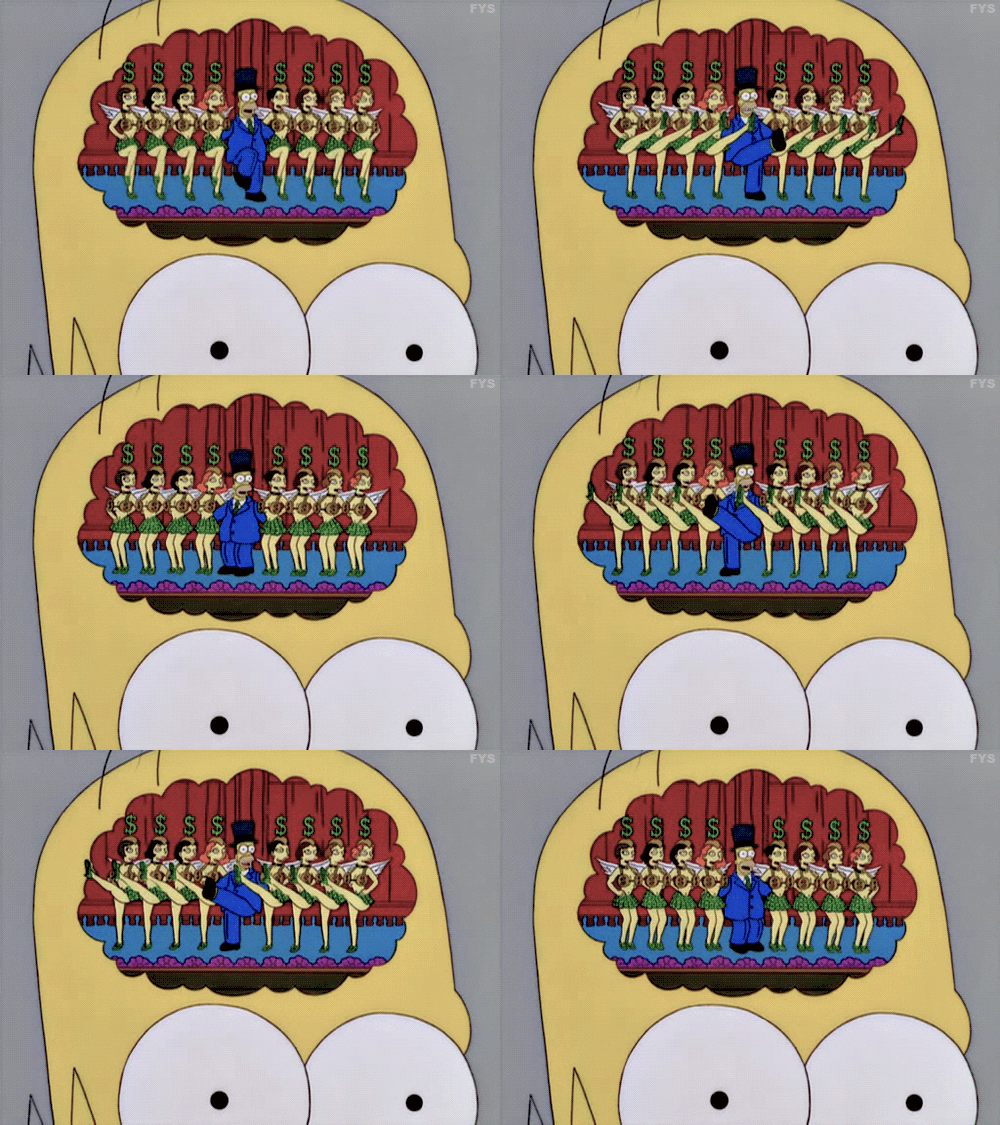
tv the simpsons simpsons money homer GIF
I'll continue.

Around page 15 they realize the complexities of global communications systems vastly exceed the ability for people to completely understand how they are evolving and how persons currently interact with them. Tech is out of human control because of the massive scale in which changes take place: from the top down and the bottom up. The communications systems both human and technological constantly morph at increasing speed into something larger: within the fields of law, finance, technology, medical and so on. Nevertheless, the authors articulate a Marxist analysis of new media during their dialectics and continued to question some important issues that relate to the interdisciplinary nature of transmodal communications.

I like Marxist strategies for purposes such as shown in the video below. Beyond that, not so much.

The explication of why people understand different media differently because of who they are seemed obvious and the authors' use of reductionism to say that danger exists in treating "modes and media and languages as an array of discrete resources" rather than realizing their interconnectedness seemed superfluous (20).

I find Cynthia's comments bizarre as somehow trying to find a basis for the lack of trans-modal communications because of the "current political climate of the United States, [which is] too often influenced by combined strains of isolationism and arrogance" (25). Her comments seemed very isolated within the current death cult of academic multiculturalism and social justice. If you can't find a legitimate basis for refutation then as a last resort don't use a similar basis for your refutation otherwise somebody will surely accuse you of a microaggression. That is my suggestion to her. I mean what is gained by dumbing down an already substandard educational system. By expanding the educational system's teaching facilities to include more highly specialized courses that require an ever greater intelligence within the student populace, aren't you isolating it further from the likes of Deqa Mahammed's mother? To the author's credit, they (although I don't know if that includes Cynthia) acknowledge such problems later in the essay.

As I study more deeply into critical theories and the humanities within academia the more I see the intentional separation of the classes. In the late 20th century criticisms enhanced national elitism and today it destroys the middle class and serves global elitism. The trick played on the less fortunate is that today a global agenda hides behind a Marxist mask of social justice. History shows that this peculiarly lethal strategy leads to the grandest of all human atrocities. Is it ignorance of human psychology, or the lack of understanding of the collective psychological processes that led to WWII, or is it an intentional misuse of ideological criticisms by professors who know exactly what they are encouraging? Certain professors from UCLA who work with NGOs in South East Asia obviously are acquainted with CIA developmental programs and know what they are doing. For them, the promotion of a social justice regime here in America is intentional and a way to subvert democracy as a means to unite the world under global governance. I don't believe that is the case for most professors who are sheltered within academia and who have decent incomes. Employment and standards of living are stable enough and they don't have the time to become conscious of the socio-political environment outside of casual media encounters. Most of the students, unfortunately, have no idea as to what is taking place. Having expressed my concerns about globalism and elitism, I want to conclude by saying that I'm not necessarily opposed to an egalitarian form of global governance. The concern that I have is about getting caught up in the shuffle that is due to undemocratic social engineering efforts.

Some may say "Ray, that sounds a little paranoid to me. Do you think a conspiracy is taking place?" My answer is this, "In 2007, they hired me to work for them for a short period of time." I was well known for videotaping events from my work with the Linux Public Broadcasting Network and a little ole lady from Forbes's 100 list of "Who's Who" hired me to videotape a three-day conference in the mountains. The conference attendees which she later told me she had hand picked consisted of CIA, FBI, FEMA, three active duty Marines, IT personnel from Southern Bell, and various other sordid types. This group of people referred to themselves as a paperless shadow government that goes into any area of disruption and does whatever they need to do without leaving a trace. This was the prototype group for the Fusion Centers that are now spread across the United States of America.

John Carpenter in They Live (1988)

I found the authors' discussion of collaborative tools interesting. For my project group in the Digital Humanities, we use Ryver, Google Docs, and Google Drive. We have also used Github. Their discussion reminded me of discussions at the Linux Labs Users Group from 17 years ago where we discussed the same issues. Collaboration over the internet has been a function of the open source software community since at least the early 1990's. Their essay made me think of how distant English departments are from those on the frontlines of tech. Over 20 years of exponential change has taken place! This is not to say that the authors are not current just that the concerns that people have about online communications seems to remain constant. Today, the questions are being asked in an effort to facilitate communications technologies and to make them available through state-sponsored educational systems. Back then, we addressed these kinds of questions for our own special interest groups via chat boxes, and for me, it is interesting to see the questions now being asked by English professors.

I liked the essay and it gave me reasons to have some fun. I also enjoyed reading an exploratory, dialectical essay rather than an argumentative essay. In college, I always write argumentative essays and it is not natural for me. I want to consider things and what they might mean rather than practice arguing that something is so, or worse attempt to use words to convince somebody that I believe a thesis has something to do with the truth. Laws are for those who know how to use them against those who do not know how or cannot afford to use them. The problem writing argumentative essays is that I know that I'm being less than honest as soon as I stake a claim. It is not that justification for any claim may be considered as insufficient that is at issue, only that I know the counterarguments and possible consequences: the uncertainty of sequences that may follow. Argumentative essays are unethical in that way. An exploratory essay is relieved of the unethical nature of the argumentative essay, at least to a degree, and therefore capable of revealing more ethical/beneficial information.


Tuesday, April 18, 2017

The Everything and the Nothing of the Simulacrum

In the end, the race to achieve cyber-immortality converged with nuclear annihilation. We lived and died forever.

WikipediaBaudrillard20040612-cropped.png"Jean Baudrillard (/ˌboʊdriːˈɑːr/; French: [ʒɑ̃ bodʁijaʁ]; 27 July 1929 – 6 March 2007) was a French sociologist, philosopher, cultural theorist, political commentator, and photographer. He is best known for his analyses of media, contemporary culture, and technological communication, as well as his formulation of concepts such as simulation and hyperreality. He wrote about [many] diverse subjects . . . Among his best known works [is] Simulacra and Simulation (1981). His work is frequently associated with postmodernism and specifically post-structuralism." (Wikipedia)

I presented this essay to my Beginning Theory class. The following Youtube video preceded the reading of the essay. The video includes images from Peter Barry's book Beginning Theory (2009). By showing the video, I hoped to achieve a quick coverage of the concepts from the book; I attempted to tie video clips from The Matrix to the book and to the meaning of the word simulacrum. I was standing at a podium to the right of the screen at the time the video played.


Central to the theory of Baudrillard in Simulacra and Simulation (first published in 1981) is the term simulacrum: the singular form of simulacra. The word simulacrum becomes a kind of container sign for the inclusion of signs that have particular qualities of realness. Signs in the real have signifiers that represent real things such as flowers. Simulacra of the third order appear to represent the real through simulation but do not signify it. According to the author, the social stratum becomes increasingly hyperreal in complexity and artificiality as simulacra continually diminish the depth of meaning by overwhelming it with a plethora of representative simulations (2). To complicate things further, the word simulacrum has an attribute of numinosity built into its meaning since simulacra may be signs, images, or systems of models that simulate reality; and, as postulated by the author, “God himself [may] be simulated . . . reduced to the signs that constitute faith . . . a gigantic simulacrum” (5-6). Thus, difficulty in defining what the word simulacrum means is due to the way that Baudrillard uses the word as a monad--an elemental oneness--that collapses the real into an endless expansion of simulations of the real (monad).

Before going further into the complexities that underlie the meaning of the word simulacrum, the following example should help concretize what the author means by a simulacrum. The dollar as a fiat currency represents a simulacrum that is in a constant process of simulation. It ceaselessly simulates a real-world truth as an exchange of value, but the dollar does not have intrinsic value; its deepest truth is “In God We Trust.” The derived dollar's real-world value comes from exchanges with other fiat currencies. Dollars created as instruments of debt enter into existence as an electronic entry during the creation of debt obligations such as loans. Therefore, the dollar represents a simulacrum that simulates an underlying truth which does not exist. Financialization is sorcery of simulation at the highest level, and it threatens to destroy the social stratum through collateralized debt obligations, credit default swaps, naked short sales, rehypothecation and so on. In a sense, the financial industry is the glittering facade of a simulacrum; a hyperreal representation perpetuated through simulation.

The author’s reference to a system of signs that attests to God as "a gigantic simulacrum" positions Baudrillard to subvert grand narratives through postulates that question the meaning of reality and by his definition of the simulacrum as true. The epigraph to Simulacra and Simulation, which is a synopsis by Baudrillard of the “Book of Ecclesiastes,” affirms the vanity of idealizing so called truth. It states that “[t]he simulacrum is never that which conceals the truth---it is the truth which conceals that there is none. The simulacrum is true. --Ecclesiastes” (1). The religious tone of his epigraph imbues itself into the meaning of the word simulacrum which is “true” while the grand narrative of the Bible as the actual word of God--the Truth—is negated by the words “it is the truth which conceals that there is none.” The epigraph suggests that the author considers The Bible and other religious doctrines--ideologies--as forms of second order simulacra (6).

Baudrillard’s attribution of the epigraph to “Ecclesiastes” seems to relate to the way his theory of simulacra and simulation parallels the phrase from “Ecclesiastes” that says “[a]ll is vanity” (English Standard Version, Ecc. 1.9). Many signs within modern social systems represent simulated versions of reality. These simulations are simulacra that conceal an absence of referential to the real. They save the reality principle at the cost of truth (13). Attempts to prove the truth in such a reality is vanity, and yet the “simulacrum is true” (1). To me, this statement indicates an attribute of representation inherent in a sign regardless of whether or not it references some reality is what is true. The idea that the simulacrum is true bears out whenever people make decisions based on representations of simulations that lack referential to the real. The simulacra become as actual as the real--the true.

In its more distilled definition, according to the O.E.D., simulacrum comes from the Latin adjective simulāre which means to make like, or to simulate, and is defined as “[s]omething having merely the form or appearance of a certain thing, without possessing its substance or proper qualities” (simulacrum). Accordingly, a photograph is a simulacrum. Baudrillard builds upon these definitions through a transgression into the realm of the gods where a sign’s reference to the depth of meaning ends. He introduces four phases of the image by using the subjunctive clause would be when he says “These would be the successive phases of the image” (6). Thus, his definitions of the phases of the image are expressions that are not known to be true within reality. Perhaps they would be true in the case that reality is a gigantic simulacrum. The “four phases of the image” are:
1 It is the reflection of a basic reality.
2 It masks and perverts a basic reality.
3 It masks the absence of a basic reality.
4 It bears no relation to any reality whatever; it is its own pure simulacrum. (6)
Analogies to the way the phases of the image represent things follow. First, a photograph of a flower reflects the underlying reality of a flower. Second, a photo-shopped picture represents the image with embellishments that mask and pervert the basic reality of the object photographed. Third, a virtual reality 3D Tilt-Brush painting of a flower signifies that it is real. It masks the absence of reality by way of a simulated representation. Lastly, to use an image from Barry, a “completely abstract painting” such as a solid colored mood painting by Mark Rothko bears no relation to any reality (85).

Baudrillard notes concern about the third phase of the image and simulation that is a third order simulacrum (6). Simulation without a signifier “is the generation by models of a real without origin or reality” (Baudrillard 1). The author goes on to say that “simulation is of the third order, beyond true and false, beyond equivalences, beyond rational distinctions upon which the whole of the social and power depend“ (Baudrillard 21). The example of the financial industry that I’ve offered authenticates Baudrillard’s concern. Banks have become too big to fail and their executives too big to jail. Although many examples in Simulacra and Simulation demonstrate how simulations negatively impact society, Baudrillard’s concern does not imply that third order simulacrum are destructive in and of themselves. His concern is more of a call to respond according to the nature of simulacra.

Baudrillard’s exploration into the nature of the simulacrum reverberates through the writings of other postmodernists that have built upon his theory. Nick Bostrom’s augment within his paper “Are You Living In a Computer Simulation?” makes three propositions about humans reaching a “posthuman” stage. He then concludes that “[i]t follows that the belief that there is a significant chance that we will one day become posthumans who run ancestor-simulations is false unless we are currently living in a simulation.” In response to Bostrom’s argument Elon Musk, earlier this year said that “there is less than a billion to one chance that we are living in a base simulation.” In other words, there is less than a one in a billion chance that we are not living in a gigantic simulacrum.

Attempting to conclude the points I’ve covered in summary, to bring clarity to the term simulacrum, leaves me at a loss. My only response is, “The simulacrum is true.” Call it God if you like.

Works Cited
Barry, Peter. Beginning Theory: An Introduction to Literary and Critical Theory. Manchester                       University Press, 2009.
Baudrillard, Jean. Simulacra and Simulation. The University of Michigan Press, 1994.
Bostrom, Nick. Are You Living in a Computer Simulation?. 2003, simulation-argument.com.                     Accessed 14 November 2016.
English Standard Version. BibleGateway.com, www.biblegateway.com/passage/?                                       search=Ecclesiastes+1&version=ESV.
"monad, n. and adj." OED Online. Oxford University Press, September 2016. Accessed 14 November        2016.
Musk, Elon. “Is life a video game? | Elon Musk | Code Conference 2016.” YouTube, uploaded by               Recode, 14 November 2016, www.youtube.com/watch?v=2KK_kzrJPS8.

"simulacrum, n." OED Online. Oxford University Press, September 2016. Accessed 14 November            2016.

Saturday, April 15, 2017

A Review of Cosmopolitan English and Transliteracy by Xiaoye You


When money loses its value, microaggressions and speech will be criminalized. The populace shall not accuse oligarchs of financial terrorism and war crimes. I am an individualist and believe in returning governance first to nation-states, then to states, then to counties, then to townships, and then to the people. I have zero hope for centralized governance, and instead, I promote the replacement of government with open source software, referendum, and the most faceless and omnipresent form of democracy possible: a world ruled by everyone. Centralized governments have been successful at killing hundreds of millions of people. The larger they are, the more they kill. When I see dangerous globalist ideologies, I am compelled to point them out.


Xiaoye You
Associate Professor of English and Asian Studies
English Honors Adviser
Penn State University
B.A. English Education, Gannan Teachers’ College, China
M.A. Applied Linguistics, Northwestern Polytechnic University, China
Ph.D. English, Purdue University, USA, 2005
Areas of Specialization
Rhetoric and Composition
multilingual writing, comparative rhetoric, world Englishes

In Cosmopolitan English and Transliteracy (2016) Xiaoye You argues for the greater inclusiveness of Cosmopolitan English and transliteracy into the American educational system. His book ties the term Cosmopolitan English to the word accent. The text made me think of my Chinese friend of forty years. A long time ago, when my friend lost his job at a place that we both had worked at, I talked with the owner of a different company who I was then working for to see if he would interview my friend. I needed to be relieved of some of my duties to attend computer networking technologies classes. The owner hired my friend despite the company's concerns about his Cosmopolitan English. It turned out that my friend remained on as the last employee at that company and continued working in his position after the owners sold out to a larger tech company. I also had a Chinese business associate who is a physicist at Jet Propulsion Labs. He was at the Tiananmen Square protests of 1989. Then, I thought of my English professor from Nepal who also has an accent, and I began to think about the complexities that surround Cosmopolitan English. To me, accents are outside of human relationships and more of an integration barrier both psychologically and pragmatically for those that must endure them. Professor You's book highlights some ways that Cosmopolitan English appears in media and literature. Although I appreciated the explications of the various manifestations of Cosmopolitan English, in light of the current lack of success of English departments to teach formal English, I found the author's prescriptive solution questionable.

The book is really a great read but by making Cosmopolitan English a construct supported by catch-phrase terms such as xenophobic, neocolonialism, racism, sexism, microaggressions, marginalized, privileged, othered and so on, the authenticity of the author's virtue-signaling becomes suspect to the possibility of underlying financial and positioning motives. The irrefutable nature of microaggressions lends itself nicely to divide and conquer strategies. Independent of the point of view of the one judging, claims of microaggressions may be made by anyone and everyone. Discussions about microaggressions shut down discourse and lead to aggressiveness because once somebody is told they are microaggressive the same may be said of the accuser: their claim is a microaggression. We might remember how U. C. Berkeley students shut down free speech earlier this year. A difference of political opinion stirred students to violence. Outrage over the greater issue of the assault on the constitutionality of freedom of the press became a minor public debate because of concerns over the microaggressive nature of the speaker's expected political speech. Had the author put his political opinions aside and stuck to the excellent demonstrations of how transliteracy is used to produce greater understanding I would have been entirely persuaded that transliteracy critiques are needed.

 The author relegates people that speak with accents to an othered class of which he seeks a better political/educational solution than currently provided for within academia. Where the author sees social justice--a phrase used to mean fairness--as a top-down pedagogical approach, I see the injustices of divisiveness and am reminded of the false accusations that are accompanied by atrocities against people who have been singled out as those who do not conform to the social. The reason for my perspective is not due to the author's excellent methodology but rather that he relies on the aforementioned catch-all phrases as support for his propositions. My Chinese friend told me of the experiences he encountered during his membership in Mao Zedong's Cultural Revolution. He had the responsibility of deploying plastic explosives: blowing up trains and bridges. My business associate from J.P.L. told me about the time that he helped carry four of his friends who were shot to the hospital the night the Chinese government decided to end the protest at Tiananmen Square. Three of his friends died. To me, social implies collectivism and social justice suggests collective justice. Collective justice is administered by a judicial system of laws and regulations and to consider one as being a microaggressor is outside of the scope of law since the accusations must necessarily be judged as subjective and therefore speculative. Microaggressions are not a credible reason with which to argue for fairness.

In regards to political/educational social justice, one must wonder about the financial and positional opportunities available to those that support the implementation of speculatively based educational programs. Motive becomes especially suspicious when the author plays on sentimentality to suggest that educational systems have a moral duty. Governments and institutions do not have the faculty of morality because they are not individuals. Collective entities crush individuality through pressures to conform; they stifle the individual and snuff out the source of morality. Morality is something that is earned by each person over a lifetime of psychological development, not by the force of law or the force of social conformity. An ethos--a natural understanding of how to play the game--within the global village of America has yet to supplant nepotism, and no amount of social engineering is likely to change that. Let us never forget that the path toward the extreme end of political/institutional social justice leads through the Cambodian killing fields of Pol Pot. My experiences inform me that people organically appreciate one another by living in multicultural societies such as Los Angeles: by working through life side by side. Had the author omitted his emphasis on social engineering as we-need-to(s), I would have found his book a more enjoyable read.

I appreciated seeing into the experiences that multicultural students have to deal with and I appreciated the way that the author brought out the potentialities of students through a synthesis of multicultural backgrounds. While reading through the examples of academic transliteracy writing, I realized the resultant meaning otherwise inaccessible and understood why people wrote in accented languages. Instead of reading or hearing a flat character stereotype, despite my familiarity with multicultural friends and associates, I more clearly recognize those behind the words written or spoken in Cosmopolitan English as being people that draw on useful and meaningful resources of more than one culture. Also, the examples of code switching were very enlightening because I noticed occurrences of it in many books and movies but never knew that it had a formal name. Despite the drawbacks mentioned above, I'd recommend the author's book to students that wished to know how English relates to multiculturalism.

One final note on Cosmopolitan English and Transliteracy is about the author's question which he says naturally arises: "why should we continue to emphasize a single dialect (Standard English) and a single style (formal or academic style) in the writing classroom?" (193). My answer to his question which, to me,  does not "naturally arise" in light of his explications on "transliterate practices" is that English is a global language that unites all. By demoting English in favor of Cosmopolitan English educational departments across the globe would be participating in a return to national languages except for those countries in which English is the primary language. In English-speaking nations, students would be even worse students than they currently are. And, the author's proposition would benefit the larger number of Mandarin speakers more than any other language.

It is sad to see such an intelligent author mix his biased political views into an otherwise important book. I have placed Cosmopolitan English and Literacy into the most dangerous books section of my library because of its globalist top-down agenda. And, a little something to back my 7-year-old individualist claim that centralized governance can, and as I believe inevitably will be replaced by software. Harvard researcher Primavera de Filippi on Blockchain and the Quest to Decentralize Society

Monday, April 10, 2017

Some of My Favorite Latin American Authors


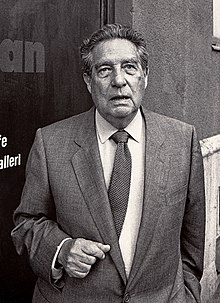
Octavio Paz - 1988 Malmö.jpg
Octavio Paz Lozano Born March 31, 1914
Mexico City, Mexico
Died April 19, 1998 (aged 84)
Mexico City, Mexico
Occupation Writer, poet, diplomat
Nationality Mexican
Period 1931–1965
Literary movement Surrealism, existentialism
Notable awards Miguel de Cervantes Prize 1981 Nobel Prize in Literature 1990


Related image
Carlos Fuentes Macías was a Mexican novelist and essayist. Among his works are The Death of Artemio Cruz, Aura, Terra Nostra, The Old Gringo and Christopher Unborn. Wikipedia
Born: November 11, 1928, Panama City, Panama
Died: May 15, 2012, Mexico City, Mexico
Nationality: Mexican
Awards: Miguel de Cervantes Prize, Rómulo Gallegos Prize, More
Quotes
Writing is a struggle against silence.
I don't think any good book is based on factual experience. Bad books are about things the writer already knew before he wrote them.
What the United States does best is to understand itself. What it does worst is understand others.


Borges 1921.jpg
Jorge Francisco Isidoro Luis Borges Acevedo
Born 24 August 1899
Buenos Aires, Argentina
Died 14 June 1986 (aged 86)
Geneva, Switzerland
Occupation Writer, poet, philosopher, translator, editor, critic, librarian
Language Spanish
Nationality Argentine


All info on this page is from Wikipedia

A Digital Humanities Study of Reddit Student Discourse about the Humanities

A Digital Humanities Study of Reddit Student Discourse about the Humanities by Raymond Steding Published August 1, 2019 POSTED ...